
Nov. 14, 2025
Store batteries in a cool, dry, and well-ventilated area. Ideal storage temperature is around 20–25 °C; avoid prolonged exposure to high heat.
Keep them in their original packaging until use to prevent short circuits and protect terminals.
Avoid exposing them to direct sunlight, combustible materials, or moisture.
If batteries have been stored for a long time, they may undergo “passivation,” increasing internal resistance. To restore normal performance, apply a moderate load briefly to de-passivate.
Yes — these batteries are designed to work over a very wide temperature range, many from –60 °C up to +85 °C, making them suitable for harsh environments.
Avoid exceeding rated temperature limits; extremely high temperatures can cause leakage, damage, or shortened life.
During use, do not subject the cells to mechanical stress, reverse polarity, or short-circuiting, especially under extreme temperature conditions.
Yes, but disposal must follow proper hazardous-waste procedures because these batteries contain toxic and reactive chemicals.
Specialized recycling facilities can neutralize or reclaim battery components safely.
Avoid incineration or mechanical damage when disposing; follow local regulations for hazardous waste.
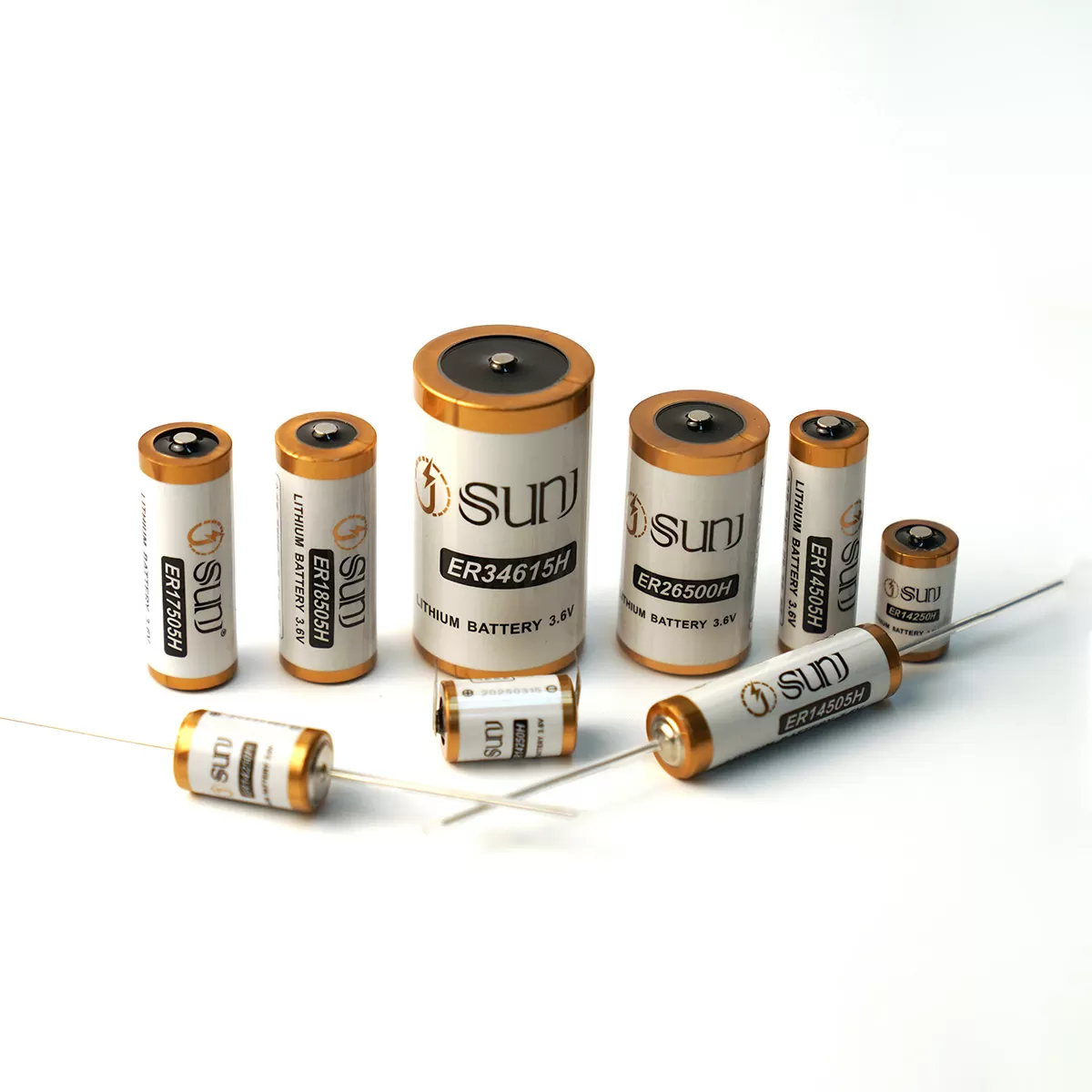
Here are some common Li‑SOCl₂ battery models to consider:
Tadiran TL‑5955 2/3 AA 3.6 V — Compact, reliable for low‑current devices.
Tadiran TL5104 AA 3.6 V — Standard AA size, good capacity for IIoT or sensor applications.
Saft LS14500FLC AA 3.6 V — High-quality cell from a trusted manufacturer.
ER32L100 3.6 V Li‑SOCl₂ — Larger capacity, suitable for longer run-time devices.
ER14335 2/3 AA 3.6 V 1650 mAh — Mid-size, good for compact devices needing high energy.
Selection Tips:
Determine current draw (continuous vs. pulse).
Confirm the temperature range for your application.
Check physical size constraints.
Estimate expected lifetime for device operation before replacement.
Prices vary based on capacity, size, and brand.
Small AA or 2/3 AA cells typically range from $3 to $9 per unit.
Larger or high-capacity cells can range from $9 to $15 per unit.
Bulk purchases for industrial projects may reduce per-unit costs.
SUNJ Lithium thionyl chloride batteries are ideal for long-term, low-power applications, especially in harsh environments. To maximize performance and safety:
Store properly in cool, dry conditions.
Respect temperature limits during use.
Recycle or dispose of through approved facilities.
Select the right model based on size, capacity, and load requirements.
Previous: Lithium-Thionyl Chloride Battery Passivation Characteristics Solution
Next: li ion battery types
If you are interested in sending in a Guest Blogger Submission,welcome to write for us!
All Comments ( 0 )