
Aug. 08, 2025
Low-voltage (LV) switchgear is a critical electrical system component used to control, protect, and isolate electrical equipment, particularly in power distribution and motor control applications. It's typically rated for voltages up to 1000V AC and is designed to handle short circuits, overloads, and other fault conditions.
Low-voltage switchgear is a versatile solution for safely and efficiently distributing power, whether for a building or any other structure that requires electricity.
Our customers choose our switchgear for two key reasons: first, we manufacture high-quality, custom-built switchboards that meet the latest industry standards; and second, we provide exceptional customer service.
Low-voltage switchgear—often referred to as switchboards—acts as the central control hub for all electrical power entering and circulating within a building or other structure. Power is first fed into the switchboard, which then distributes it to various locations via cables or busbar systems.
In our context, “switchgear” always refers to low-voltage switchgear, typically operating at around 400V AC. Power is supplied from the Distribution Network Operator (DNO), usually through an incoming transformer, into the main switchboard. From there, it is distributed using protective devices such as circuit breakers and fused switches, or non-protective devices like isolators. These components may be located in the main switchboard or in downstream sub-boards as needed.
The size of each device depends on the electrical load or current required by the connected equipment. It’s important to note that while circuit breakers and fused switches protect against overloads and faults, isolators do not—they are intended for manual switching to completely disconnect equipment from the power supply, such as isolating the output of a UPS system.
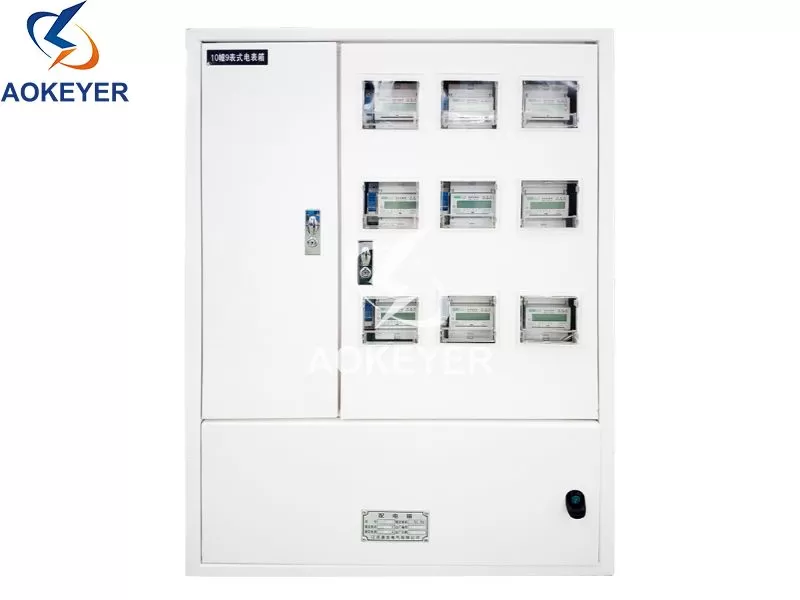
Most installations feature at least one main LV switchboard, typically fed by a mains transformer. An AF Switchgear-manufactured board at 400V can be supplied by a transformer up to 4MVA, delivering as much as 6300A and withstanding fault currents up to 100kA. For systems requiring higher resilience, multiple transformers and/or main LV switchboards can be used, with distribution continuing via sub-boards in a process known as sub-distribution.
Sub-boards help deliver power closer to the point of use. For any new installation, a power discrimination study should be conducted by an electrical engineer to ensure cables, busbars, and protective devices are correctly sized—not only for normal operating currents but also for potential short-circuit fault conditions. This step is critical for safety.
In summary, low-voltage switchgear is a precisely engineered assembly of steel enclosures, copper conductors, and a combination of protective and control devices. Its primary functions are to control, protect, and isolate electrical systems, enabling safe operation, quick fault clearance, and efficient power distribution. In this context, low voltage refers to systems operating at 1000V AC or below, or 1500V DC or below.
A mains transformer or backup generator supplies power to the switchboard via cables and/or busbars, feeding into an incoming circuit breaker or device—typically an ACB (Air Circuit Breaker) or MCCB (Moulded Case Circuit Breaker).
From the output side of these incoming devices, power flows through internal copper busbars within the switchboard, which in turn feed smaller-rated circuit breakers—again, usually ACBs or MCCBs. These are known as outgoing ways.
Power from these smaller breakers is then distributed either directly to equipment or to sub-boards, which may contain even smaller-rated devices such as ACBs, MCCBs, or MCBs (Miniature Circuit Breakers).
In most commercial and industrial applications in the UK and Europe, the voltage supplied to switchboards is a three-phase 400VAC system. All circuit breakers and isolators are rated in amperes (amps) to indicate the maximum current they can handle safely.
Switchgear is required whenever a specific power demand needs to be managed, controlled, and distributed safely.
In a typical residential property, such as a standard house, full-size switchgear is unnecessary because the power requirements are relatively small—unless the building is exceptionally large. Most homes use a consumer unit, which is essentially a compact version of a switchboard, usually limited to 100A at 220V single-phase supply.
By contrast, commercial and industrial switchgear can be rated up to 6300A at 400V three-phase, making it capable of handling vastly greater loads and far more complex distribution requirements.
Large power users, such as data centres, can consume up to 100 Megawatts (MW) of electricity — that’s 100 million watts per hour, compared to around 3 kilowatts (kW) for a typical electric kettle.
Whether your facility requires this level of power or far less, it’s essential to have a system that distributes electricity safely and efficiently. Poorly designed or installed systems can pose serious hazards, potentially causing damage to equipment or even fatal injuries.
A well-engineered low-voltage distribution system ensures a building’s electrical supply is delivered safely. In the event of a fault, uncontrolled electricity can destroy equipment, cause severe burns, or result in death. That’s why all AF Switchgear products are designed to detect, isolate, and clear electrical faults as quickly as possible to protect both people and property.
Large electrical switchgear systems are not available from wholesalers or DIY stores (except in rare circumstances) and are not intended for public use.
As a specialist manufacturer, we design and build bespoke switchgear tailored to the specific requirements of each building or application. These systems are typically installed in controlled environments, such as plant rooms or switch rooms.
While some switchgear systems are straightforward to operate, others can be highly complex. We strongly advise that all personnel receive proper training before using any low-voltage (LV) switchgear. Operating these systems incorrectly can be extremely costly — and in the worst cases, catastrophic.
Only skilled, trained, and suitably qualified individuals should operate live switchgear. For safety, appropriate personal protective equipment (PPE) must always be worn when switching devices.
If you require bespoke high-quality Low Voltage Switchgear for your project contact us today
Previous: None
Next: None
If you are interested in sending in a Guest Blogger Submission,welcome to write for us!

All Comments ( 0 )